Smart & Solar Metering Sydney
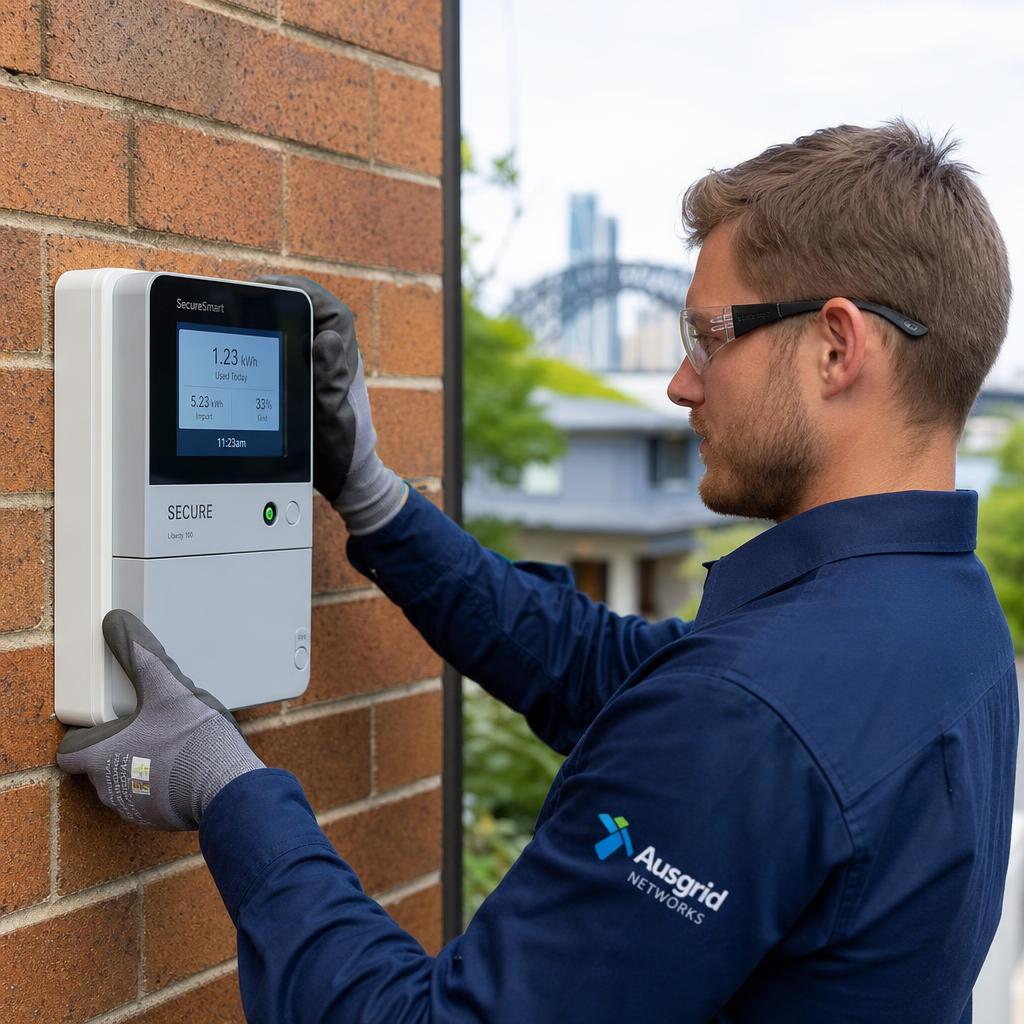
Smart meter installations and solar meter connections require an authorised Level 2 ASP to carry out and register with the network. Sydney Power Group handles the complete process — from the physical installation through to retailer registration — so your metering is accurate, compliant, and live, whether it's for a home, a business or a grid-connected solar system.
Metering for Every Property Type
Beyond standard smart meter installs, we complete specialist metering works through dedicated services: separate metering for secondary dwellings under granny flat metering, two-supply arrangements under duplex metering, meter rooms and tenancy splits under multi-tenancy metering, and high-load commercial installations under CT metering. Each page covers that project type in detail — this page covers the smart and solar metering works common to all of them.
Type 4 Smart Meter Upgrades
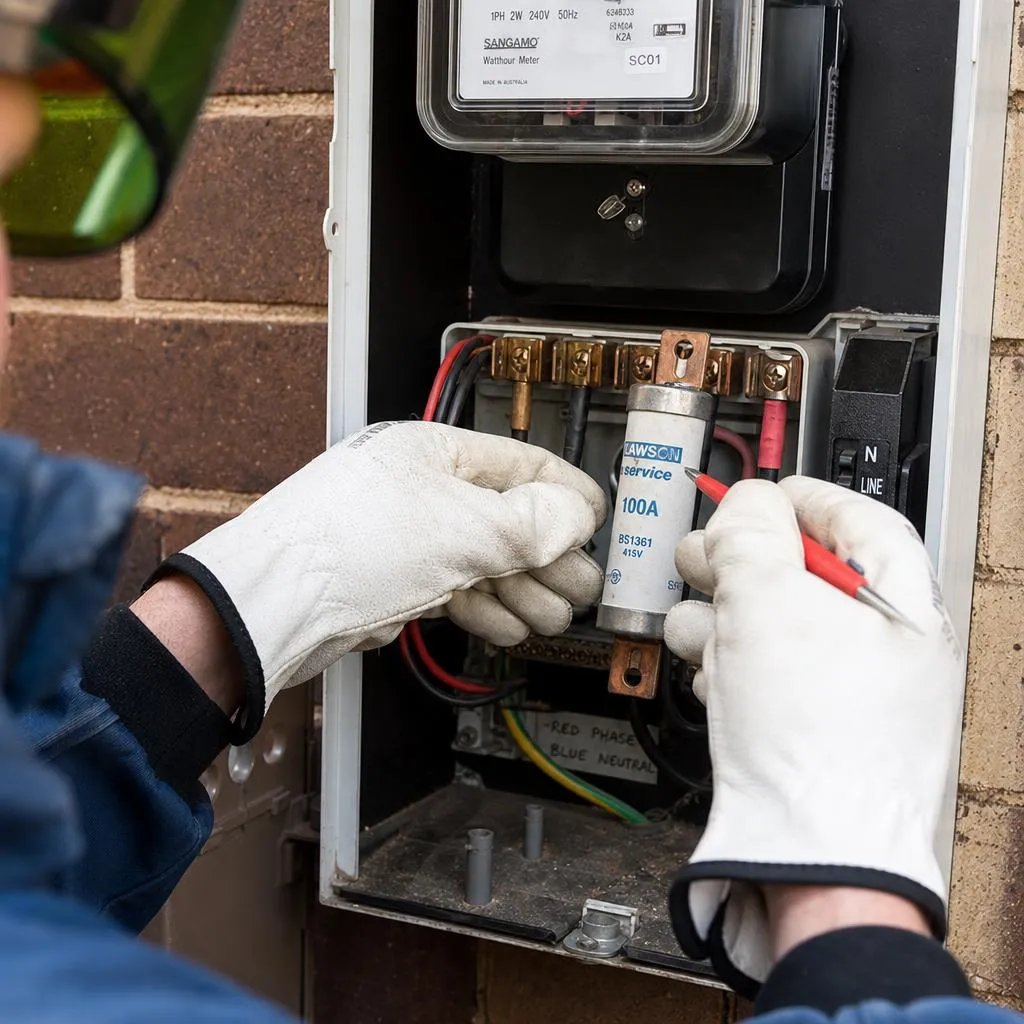
Estimated bills and quarterly read cycles are a thing of the past. A Type 4 smart meter sends interval data directly to your retailer, enabling time-of-use pricing and real-time usage monitoring. We coordinate the installation and registration with your energy retailer so the transition is clean and your billing is uninterrupted.
Bi-Directional Solar Meters
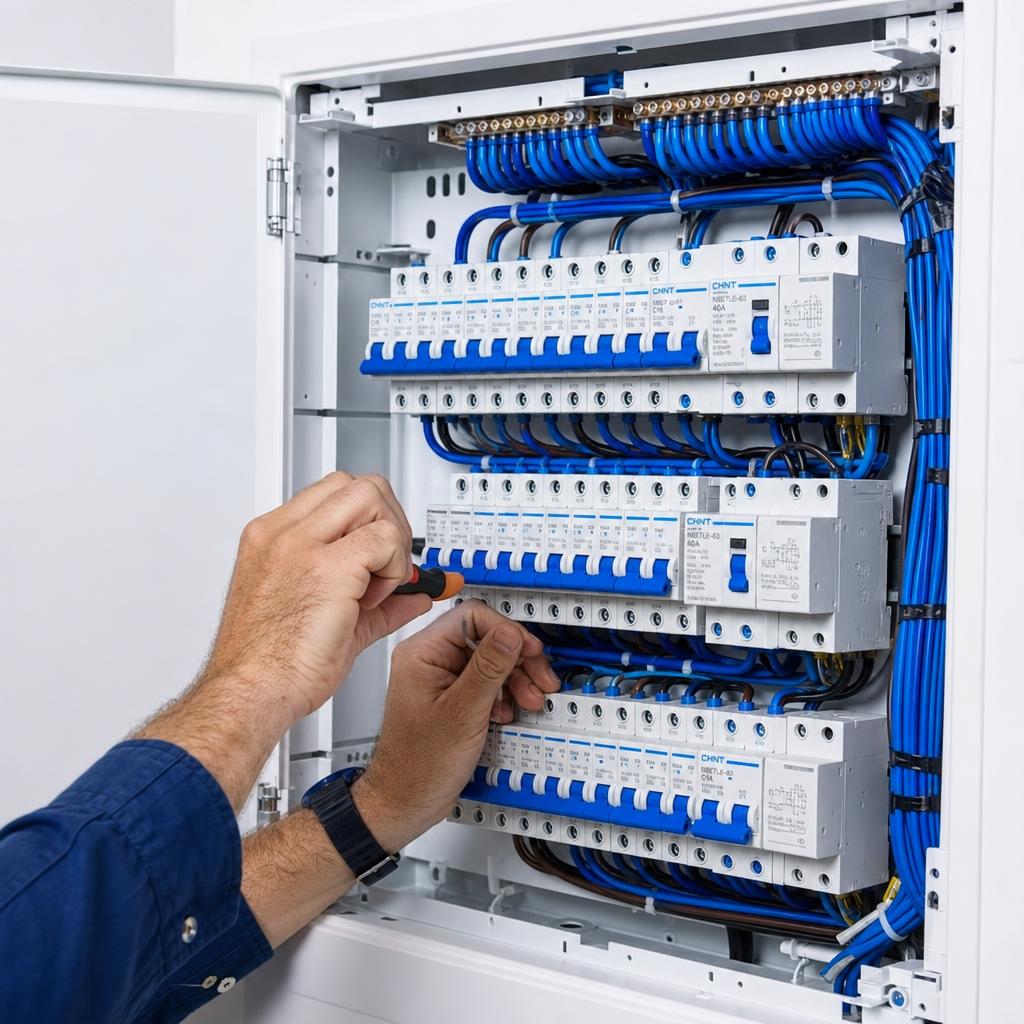
An analogue meter only measures consumption. A bi-directional meter measures both what you draw from the grid and what your solar panels export back to it — a hard requirement for any new grid-connected solar PV system in NSW. We handle the installation and coordinate formal registration with your retailer.
Net Metering, Gross Metering & Export Limiting
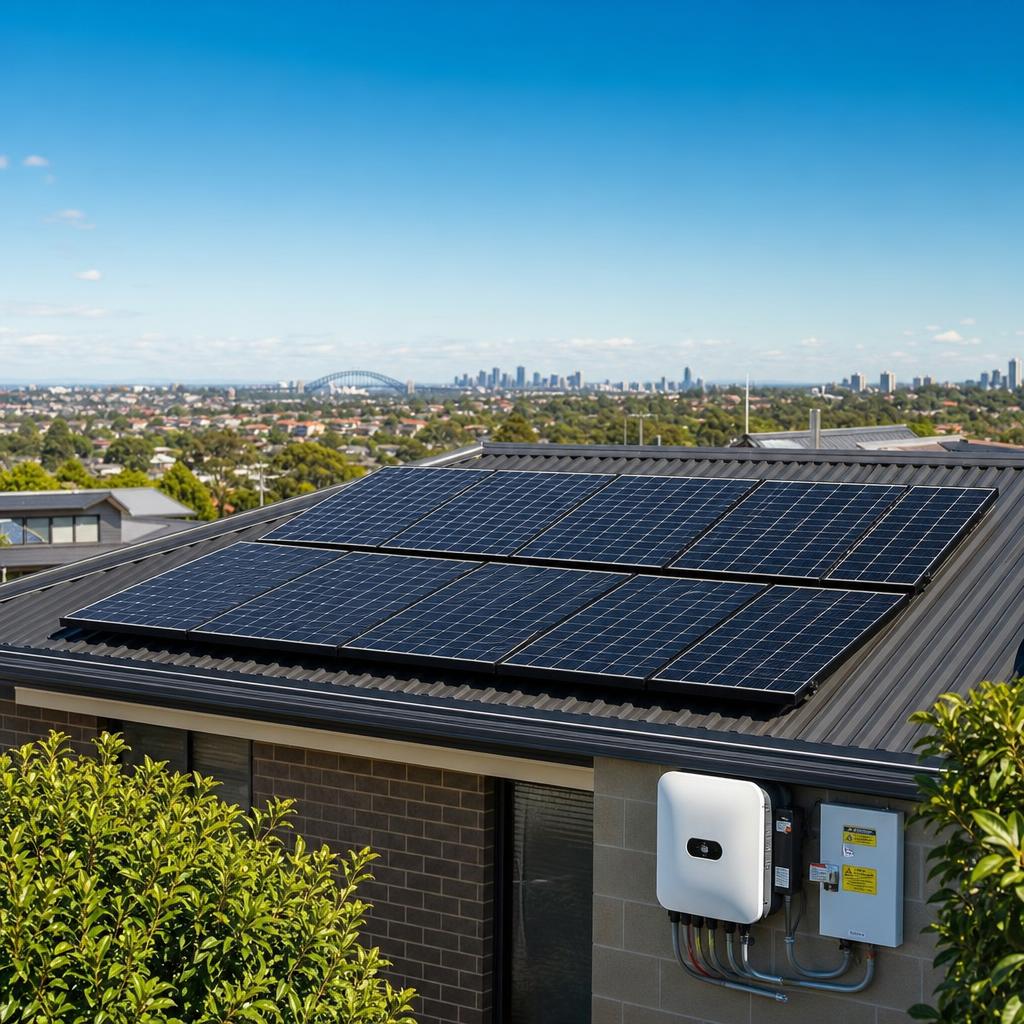
Most residential solar installations operate under net metering, where generation offsets consumption before any surplus is exported; we also handle gross metering setups for legacy systems. Where grid constraints in Ausgrid and Endeavour Energy zones limit unlimited export, we install and configure export limiting meters and relay equipment so your system stays within distributor limits and fully compliant.
Metering Under Power of Choice — Who Does What
Since the national Power of Choice reforms took effect in December 2017, responsibility for your electricity meter sits with your retailer, not your network distributor. This changed who you call and how a meter exchange is arranged, and it is the single biggest source of confusion for Sydney property owners upgrading their metering.
Under the current framework, your retailer appoints a Metering Coordinator, who engages a Metering Provider and an accredited installer — an authorised Level 2 ASP — to physically fit and commission the meter. Sydney Power Group carries out that on-site installation and commissioning work, then coordinates the registration back through your retailer so your billing is not interrupted. In practice that means you can arrange a meter upgrade through us and we manage the technical and network side, while your retailer handles the account and tariff.
The distributor — Ausgrid, Endeavour Energy or Essential Energy depending on where you are — still owns the network up to your connection point and still sets the technical rules the meter and panel must satisfy under the NSW Service and Installation Rules. So a compliant install has to satisfy both the retailer's metering arrangement and the distributor's connection and safety requirements at once. Getting an ASP who works across all three distributors involved early avoids the common trap of a meter being ordered before the panel or supply is actually ready.
Meter Panel & Switchboard Requirements
A smart meter can only be installed on a compliant meter panel. The NSW Service and Installation Rules and each distributor's requirements govern where and how the meter is mounted: adequate clear space around the meter, a suitable weatherproof enclosure, an accessible main switch, a mounting height within the permitted range, and correct circuit labelling. If the panel does not meet these rules, the installer cannot fit the meter and the distributor can issue a defect.
Many older Sydney homes still have fibro or asbestos-backed metering panels, undersized boards with no room for a modern meter, or ceramic-fuse switchboards that predate current standards. These almost always need to be replaced before a new meter can go on. We assess the panel during the site visit and, where an upgrade is needed, handle it under our metering panel replacement and switchboard upgrade services so the whole job is completed by one authorised team.
Where the meter box also feeds the property's consumer mains, we check the mains condition and rating at the same time — an undersized or deteriorated set of consumer mains is a common reason a metering upgrade turns into a slightly larger job. Identifying that up front means no surprises once work starts. The same goes for a defective private power pole carrying the service, and for new dwellings that need a network connection before any meter can be fitted.
Solar, Three-Phase & CT Metering Explained
Different supplies need different metering. A standard single-phase home usually takes a single-phase bi-directional Type 4 meter. A three-phase premises — common with larger homes, ducted air-conditioning, EV charging or small commercial loads — needs a three-phase compatible meter, and a larger three-phase solar array may need per-phase export configuration to meet the distributor's approval conditions. If you are upgrading to three phase, our supply upgrade page covers the mains and connection side of that work.
For grid-connected solar, the meter must be bi-directional and the inverter and metering configured to the export limit granted in your connection approval. Where the local network is constrained, that limit may be zero-export or a capped kW figure per phase, enforced through export limiting equipment. Our solar connection service covers the full grid-connection and commissioning process that sits alongside the metering.
On larger installations — typically above roughly 100 amps per phase — the current is too high to pass directly through a meter. These use current transformer (CT) metering, where CTs measure the current indirectly and feed a scaled signal to the meter. If your maximum demand exceeds the rating for a direct-connected meter, your distributor will require CT metering; our CT metering page details those commercial and industrial projects.
| Metering type | What it's for | Who arranges it | Panel requirements |
|---|---|---|---|
| Basic (accumulation, Type 6) | Legacy single-total metering, read manually — being phased out for smart meters | Retailer via the Metering Coordinator (a Level 2 ASP fits it) | Standard compliant meter panel meeting the NSW Service and Installation Rules |
| Smart (Type 4) | Remotely read interval metering enabling time-of-use tariffs and no estimated bills | Retailer appoints the Metering Coordinator; ASP installs and commissions | Compliant panel with adequate space, enclosure, accessible main switch and correct labelling |
| Solar (bi-directional) | Measures import and export separately for grid-connected solar and feed-in tariffs | Retailer for the meter; distributor for connection approval and any export limit | Compliant panel plus space for inverter isolation and any export-limiting equipment |
| CT metering | Larger supplies where current is too high to pass directly through the meter | Retailer/Metering Coordinator; distributor mandates CT metering above the direct-connect rating | Panel sized for current transformers and the associated wiring and test facilities |
| Three-phase | Three-phase premises — larger homes, ducted air-conditioning, EV charging or small commercial loads | Retailer via the Metering Coordinator; ASP installs the three-phase meter | Three-phase compatible panel with adequate space and, for larger solar, per-phase configuration |
The Process, Timeframes & Cost Factors
A straightforward like-for-like meter exchange is usually completed on site in one to two hours, with a short supply interruption — normally well under an hour — while the meter is swapped. We plan the isolation in advance so you can shut down sensitive equipment, and for businesses we can schedule the changeover for a low-impact time.
How a metering upgrade runs
On-site assessment
We inspect the meter panel, switchboard and supply, confirm your distributor and identify whether the panel or consumer mains need work first.
Retailer & coordinator setup
Your retailer appoints the Metering Coordinator and raises the work order; for solar, distributor connection approval and any export limit are confirmed before we proceed.
Any panel or mains works
Where the panel or consumer mains are non-compliant, we bring them up to standard so the metering position is ready.
Meter exchange
We isolate supply briefly — typically well under an hour — swap the meter, and reinstate power, planning the interruption in advance.
Commissioning & registration
The meter is remotely commissioned and registered back through your retailer so billing is uninterrupted; this can add several business days.
The longer part of a metering project is usually the coordination rather than the physical work. Your retailer's Metering Coordinator raises the work order, and remote commissioning and registration can add several business days. Where a new solar connection is involved, distributor connection approval must be in place first, and where the panel or consumer mains need upgrading, that work is scheduled around the meter exchange. Getting a Level 2 ASP involved early keeps these steps in the right order.
Cost depends on the meter type, whether it is a simple swap or part of a solar or three-phase connection, whether the meter panel or mains need upgrading, and how the work is coordinated with your retailer. Because every board and site differs, we do not quote metering work over the phone — we assess the panel and supply on site and give you a free written quote before any work starts. Sydney Power Group carries $20 million public liability insurance and full workers compensation cover, and we work to a 60-minute response target across Sydney for urgent metering faults — arrival depends on location and traffic.
Metering Across Sydney
We install and upgrade smart, solar and CT metering right across Greater Sydney — from the Eastern Suburbs and Inner West through the North Shore and out across Western Sydney. You can find your suburb and the distributor that covers it on our locations page. Wherever you are, the same authorised team handles the install, the panel and the retailer coordination.
Smart & Solar Metering FAQs
Who is responsible for installing my smart meter — the retailer or the ASP?
Under the national Power of Choice reforms (in effect since December 2017), your electricity retailer — not the distributor — is responsible for arranging your metering. The retailer appoints a Metering Coordinator, who in turn engages a Metering Provider and an accredited installer (a Level 2 ASP) to physically fit and commission the meter. Sydney Power Group carries out the on-site installation and commissioning work and can coordinate with your retailer so the meter is registered and your billing is uninterrupted.
What is a Type 4 smart meter and how is it different from my old meter?
A Type 4 meter is a remotely read interval meter — the standard 'smart meter' now rolled out across NSW. It records your consumption in 30-minute (or 5-minute) intervals and sends that data to your retailer over a communications network, so there are no more estimated bills or manual reads. This interval data is what enables time-of-use and demand tariffs, and it is a prerequisite for accurately measuring solar exports. Older accumulation (Type 6) meters only record a single cumulative total and must be read manually.
Do I need a smart meter to install solar in Sydney?
Yes. Any new grid-connected solar PV system in Ausgrid, Endeavour Energy or Essential Energy territory requires a bi-directional (import/export) meter so that both the energy you draw from the grid and the energy your panels export are measured separately. If you still have an old accumulation meter or a solar-incompatible meter, it must be upgraded before your system can be switched on and before you can receive a feed-in tariff.
What is a bi-directional meter?
A bi-directional meter records energy flowing in both directions across your connection point: import (grid to premises) and export (premises to grid). It reports these as separate registers so your retailer can bill your consumption and credit your feed-in tariff correctly. Every modern Type 4 smart meter is bi-directional, which is why a smart meter upgrade is part of virtually every solar connection.
What is the difference between net metering and gross metering?
Net metering measures the net flow at your connection point — your solar generation first offsets your own consumption, and only the surplus is exported and credited. This is how almost all residential solar in NSW works today. Gross metering measured total generation separately and applied to legacy premium feed-in tariff schemes that have now closed. New systems are configured for net metering.
What is export limiting and when is it required?
In parts of the Ausgrid and Endeavour Energy networks where the local grid cannot absorb unlimited solar export, the distributor approves your system with an export limit (for example, zero, 1.5 kW, 5 kW or 10 kW per phase). Export limiting is enforced by configuring the inverter and, where required, installing metering and relay equipment that keeps the system within the approved limit. We set this up so your connection approval conditions are met and your system stays compliant.
Can you install a meter for a three-phase supply?
Yes. Three-phase premises require a three-phase compatible meter, and larger three-phase solar systems often need per-phase export configuration. We install and commission single-phase and three-phase direct-connected meters. Where your maximum demand is too high for a direct-connected meter, current transformer (CT) metering is used instead.
What is CT metering and do I need it?
Current transformer (CT) metering is used on larger installations — typically commercial or industrial supplies above roughly 100 amps per phase — where the current is too high to pass directly through the meter. Instead, current transformers measure the current indirectly and feed a scaled signal to the meter. If your maximum demand exceeds the rating for a direct-connected meter, your distributor will require CT metering. See our CT metering service for the detail on those projects.
Does my meter panel or switchboard need upgrading before a new meter?
Often, yes. Meters must be installed on a compliant meter panel that meets the NSW Service and Installation Rules and your distributor's requirements — adequate space, correct enclosure, an accessible main switch, and safe mounting height. Older fibro or asbestos-backed panels, undersized boards, or panels without space for a modern meter usually need replacing first. We assess the panel during the site visit and advise if a metering panel upgrade is needed.
How long does a smart meter installation take?
The physical exchange of a like-for-like meter is usually completed within one to two hours, with a short supply interruption while the meter is swapped. The longer part of the process is the paperwork: your retailer's Metering Coordinator arranges the work order, and remote commissioning and registration can take additional business days. Where a panel upgrade or new solar connection is involved, the on-site work takes longer and distributor approval must be in place first.
Will my power be off during the meter change?
There is normally a brief interruption — typically well under an hour — while the meter is physically disconnected and the new one fitted. We plan the isolation to minimise disruption and let you know in advance so you can shut down sensitive equipment. For businesses we can schedule the changeover for a low-impact time.
What does a smart or solar meter installation cost in Sydney?
Cost depends on the meter type, whether it is a straight swap or part of a solar or three-phase connection, whether the meter panel needs upgrading, and how the work is coordinated with your retailer. Because every board and site is different, Sydney Power Group does not quote metering work blind over the phone — we assess the panel and supply on site and give you a free written quote before any work starts. Call 0466 125 125 to book your free on-site assessment.
What are the most common metering defects distributors pick up?
The most common issues are: meter panels that no longer meet clearance or enclosure requirements; deteriorated or asbestos-backed metering boards; incorrect or missing labelling; inadequate main switch access; unsafe mounting heights; and metering that does not match the connection type (for example an old accumulation meter left on a premises after solar was fitted). Any of these can trigger a defect notice from your distributor, which must be rectified within the stated deadline.
Which distributors do you install metering under?
Sydney Power Group is an authorised Level 2 ASP across all three NSW distributors — Ausgrid (metropolitan Sydney, Central Coast and Hunter), Endeavour Energy (Greater Western Sydney, Blue Mountains and Illawarra) and Essential Energy (regional NSW). We install and commission metering in line with each distributor's requirements and the NSW Service and Installation Rules.
Can you relocate an existing meter?
Yes. Meters are commonly relocated during renovations, switchboard upgrades, or when a meter box is in an inaccessible or unsafe position. Relocation is Level 2 work and must comply with distributor clearance and access rules. We handle meter relocations and any associated consumer mains or panel work required to complete the move compliantly.
Call us now for a no-obligation quote. Emergency response available 24/7 with a 60-minute response target across Sydney — arrival depends on location and traffic.
0466 125 125Get a Free QuoteWhat We Cover
- Smart Meter Installation
- Type 4 Digital Meters
- Bi-Directional Solar Meters
- Export Limiting & Net Metering
- Retailer Registration Handled
What Sydney Says About Us
Don't take our word for it — read genuine reviews from real customers who booked our smart & solar metering sydney service on our Google profile, or leave one after your job is done.
Read Our Google ReviewsRecent Work
Our Other Level 2 Services
Ready to Get Connected?
Free assessment on any network electrical job. Emergency? We answer around the clock.