Private Power Pole Replacement Sydney
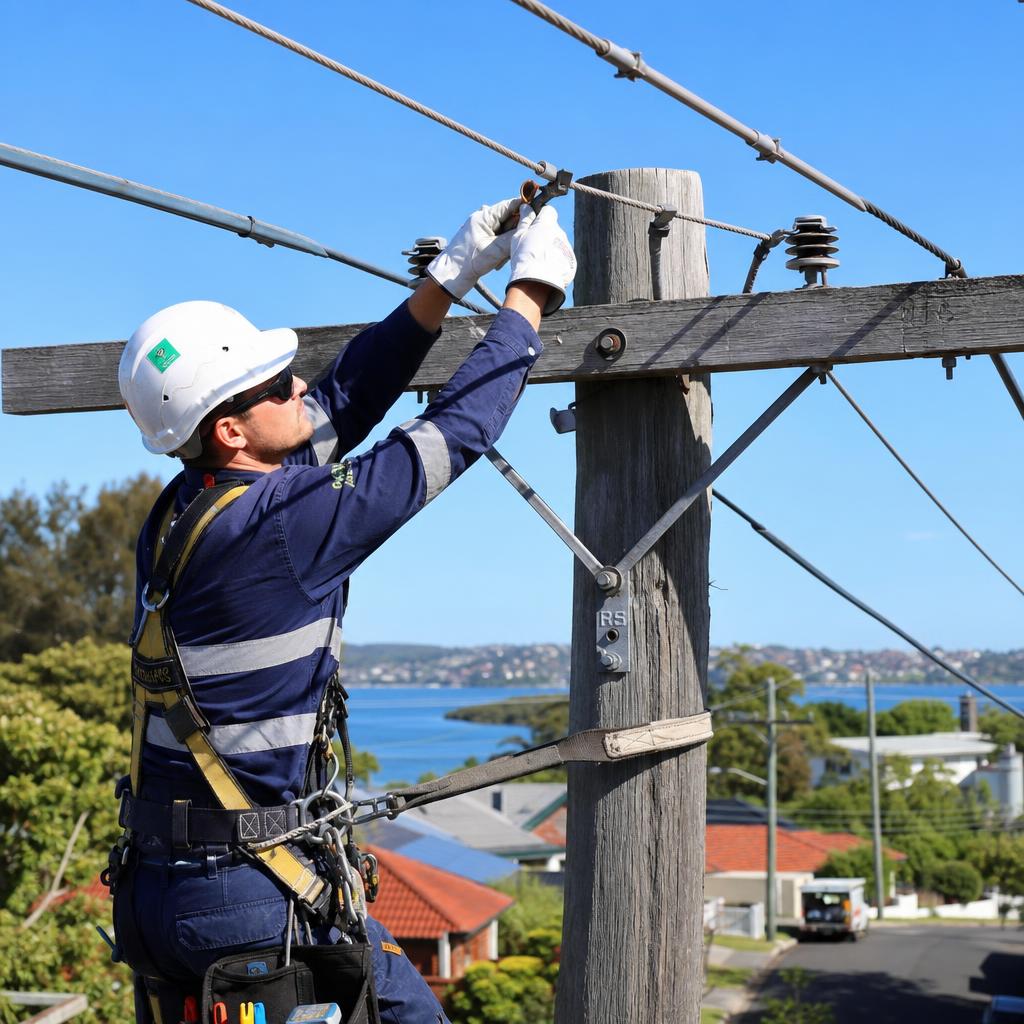
A private power pole on your property is your responsibility — not the network distributor's. When a pole fails a safety inspection or is damaged by a storm, termite attack, or age, the property owner must engage an authorised Level 2 ASP to carry out the replacement. Sydney Power Group replaces private power poles across Greater Sydney with Ausgrid, Endeavour Energy and Essential Energy authorisation. Not sure whether the pole is yours? Our private power poles guide explains how to tell, what goes wrong and when replacement is due.
When Does a Pole Need Replacing?
Ausgrid and Endeavour Energy inspect poles during routine patrols and issue property owners with notices when a pole is found to be defective. Common defects include termite infestation, fungal rot at the ground line, storm damage, cracking, and inadequate clearances to vegetation or structures. A defect notice carries a compliance deadline — failure to act results in enforced disconnection.
The Replacement Process
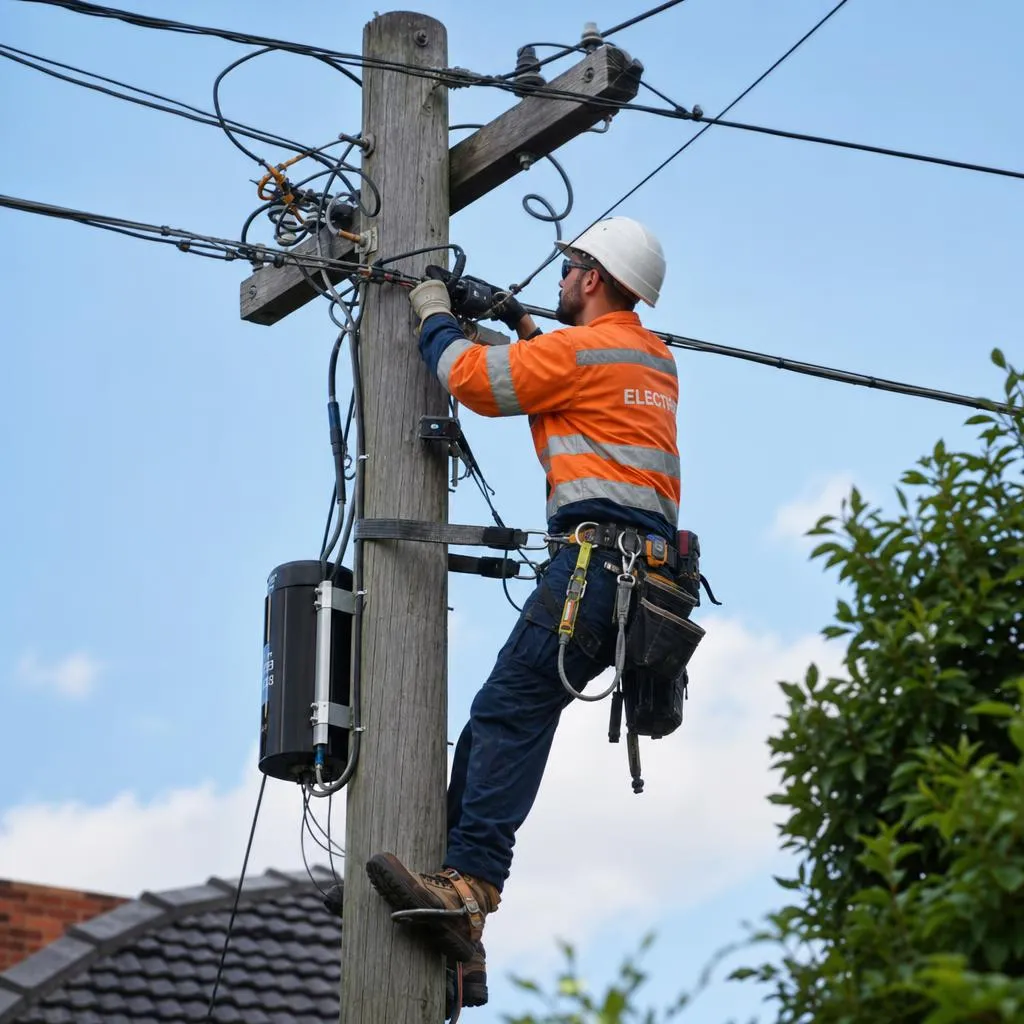
We attend the site, assess the existing pole and attached conductors, and provide a written scope of works. The replacement involves excavating the existing pole, installing a new timber, galvanised steel or composite pole to network specifications, reinstating the aerial service conductors, and notifying your distributor upon completion. Where the overhead conductors are also deteriorated, we replace these as part of the same engagement.
Storm Damage and Insurance Claims
Storm-damaged poles are a common insurance claim across Sydney. We provide detailed scope of works reports in the format required by insurance assessors and work directly with insurance builders and loss adjusters to streamline approval. Where a storm has caused immediate danger, we respond 24/7 for emergency make-safe and temporary isolation to protect residents and the public.
Underground Conversion Option
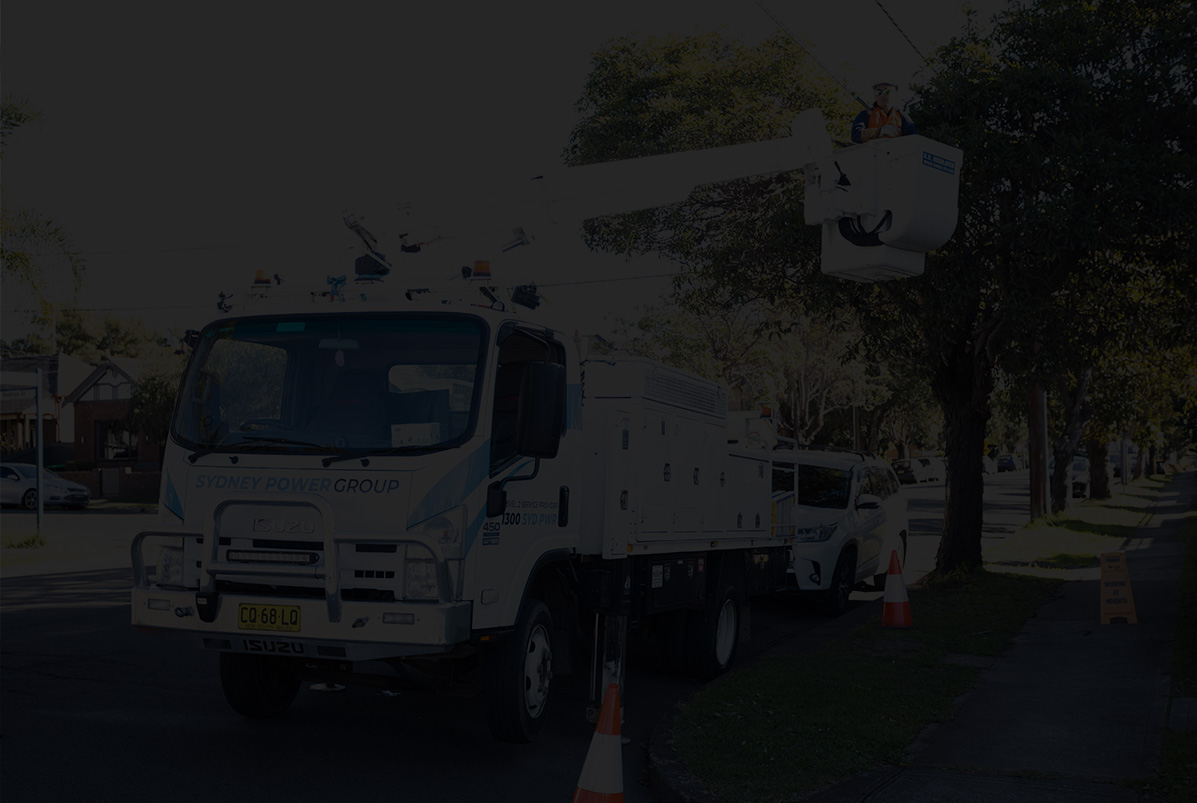
A pole replacement is a good opportunity to assess whether converting to an underground service connection is viable for the property. Underground connections eliminate future pole maintenance costs, remove storm vulnerability, and free up yard space. We can quote both options so you can make an informed decision.
Who Owns the Pole — and Who Is Responsible
The single most misunderstood point about private power poles is who is responsible for them. Your network distributor — Ausgrid, Endeavour Energy or Essential Energy depending on where you live — owns and maintains its own poles and the mains up to your point of attachment. Everything from that point onto your land — the private pole and the aerial service line running to your switchboard — is the property owner's asset and responsibility.
That is why, when a private pole becomes defective, the cost and the obligation to fix it fall on the owner, and why the work has to be carried out by an authorised Level 2 ASP rather than the network or a general electrician. If the point of attachment or the service line itself is the problem rather than the pole, that is covered by our point of attachment repairs and overhead mains services — often the two jobs overlap and we handle them together.
Pole Types — Timber, Galvanised & Composite
Three pole types are used for private connections in Sydney, and the right choice depends on span, load, soil, the number of services attached and budget. Treated hardwood timber poles are the traditional, most economical option and still the most common across older Sydney properties, though they remain vulnerable to termites and ground-line rot over time. Galvanised steel poles are immune to termites and rot and suit exposed or higher-load sites. Composite (fibre-reinforced) poles are lightweight, corrosion- and termite-proof and increasingly chosen where longevity and low maintenance are the priority.
Whichever type is used, the new pole must meet the relevant distributor's construction standard and the NSW Service and Installation Rules — correct height and strength for the span and attachments, adequate embedment depth, and safe conductor clearances. We recommend the most appropriate pole for your site during the assessment rather than defaulting to like-for-like, so you are not paying to replace a timber pole with another one that will rot out again.
| Pole type | Lifespan | Maintenance | Typical suitability |
|---|---|---|---|
| Treated timber | Long-serving but shortens where ground-line rot or termites take hold | Periodic inspection for rot, splitting and termite activity at the ground line | The traditional, most economical option; common on older Sydney properties |
| Galvanised steel | Long, with corrosion the main limiting factor over time | Low; watch for corrosion, especially in coastal or exposed locations | Exposed or higher-load sites where termites and rot are a concern |
| Composite (fibre-reinforced) | Long, being corrosion- and termite-proof | Minimal — chosen where low maintenance is the priority | Sites where longevity and low upkeep outweigh a higher up-front cost |
Defect Notices, Condemned Poles & the Rectification Process
Distributors inspect the network during routine patrols and issue property owners with a defect notice when a private pole no longer meets safety standards. Defects are graded by severity: the most urgent — an immediate safety risk — can require action within days and may prompt disconnection, while lower-severity defects give a longer window measured in weeks or months. Whatever the class, rectification must be carried out by a Level 2 ASP and the distributor notified on completion.
A pole is condemned when it is no longer structurally sound enough to safely support its conductors — for example extensive ground-line rot or a lean beyond safe limits. A condemned pole must be replaced, not repaired. Where it poses an immediate danger we carry out an emergency make-safe first — temporary support or isolation — then schedule the full replacement. Ignoring a notice only escalates matters: the distributor can disconnect your supply, and you remain liable for the rectification and reconnection cost. If the same notice also flags your switchboard or metering, we can roll that into the job via our defect notice rectification service.
Condemned pole replacement — step by step
Site assessment
We inspect the existing pole, service line and point of attachment and provide a written scope of works.
Emergency make-safe (if needed)
Where the pole is an immediate danger, we carry out a temporary make-safe — support or isolation — before scheduling the full replacement.
Arrange supply isolation
We coordinate any required supply isolation or network outage with the distributor in advance.
Remove & install
We remove the condemned pole and install the new pole to network specification and correct embedment depth.
Transfer conductors & attachment
We transfer or renew the aerial service conductors and the point of attachment, replacing deteriorated conductors in the same visit.
Restore supply & notify
We restore supply and notify the distributor for inspection and sign-off so the defect is formally cleared.
Storm Damage, Emergency Make-Safe & Insurance
Storm-damaged poles are one of the most common electrical insurance claims in Sydney. When a storm brings a pole down or leaves conductors sagging or on the ground, it is an immediate danger to residents and the public, and we respond 24/7 — working to a 60-minute response target, with arrival depending on location and traffic — for emergency make-safe and temporary isolation before any permanent repair.
Whether the damage is covered depends on your policy, but a sudden storm event is generally treated differently from gradual age-related deterioration. We provide detailed scope of works reports in the format insurance assessors expect and work directly with insurance builders and loss adjusters to streamline approval. Sydney Power Group carries $20 million public liability insurance and full workers compensation cover, which insurers and their assessors expect to see on documentation before approving network-level electrical work.
Underground Conversion — an Alternative to Replacing
A pole replacement is a natural moment to weigh up converting to an underground service connection instead. Removing the pole entirely eliminates future pole maintenance and storm vulnerability and frees up yard space. The trade-off is a higher up-front cost — the work involves trenching, conduit and a new underground service, and the site has to suit it.
We can quote both a like-for-like pole replacement and an underground conversion so you can make an informed decision. The underground side of that work is covered in detail on our underground mains service, and where a switchboard upgrade is sensible to do at the same time we handle that too via our switchboard upgrade service.
Timeframes, Cost Factors & Network Requirements
Most standard residential pole replacements are completed within a single day on site, subject to arranging the supply isolation with the distributor and any lead time for materials or access. More complex jobs — multiple services on the pole, difficult access, additional conductor renewal, or an underground conversion — take longer, and we set out the expected timeframe in the written scope of works before we start.
Cost depends on the pole type and height, the condition of the service conductors and point of attachment, site access, the number of services attached, and whether you choose an underground conversion instead. Every pole and site is different, so we do not quote pole work over the phone — we assess it on site and give you a free written quote before any work starts.
Because network requirements differ between Ausgrid, Endeavour Energy and Essential Energy, the work must be done by an ASP authorised in your network area. Sydney Power Group is authorised across all three, so we can replace and repair private poles and reinstate the connection wherever you are — to the standards your specific distributor requires.
Access, Planned Interruptions & Handover — What We Need From You
A written pole quote is only as accurate as the information behind it. To price the job properly we assess site access on the day — whether a truck, auger or elevated work platform can reach the pole position, how close it sits to buildings, fences, driveways and trees, and whether the service crosses a neighbour's land. Tight or steep access does not stop the job, but it changes the equipment and the time involved, so it is a genuine cost driver worth raising when you call.
We also confirm the materials (pole type, height and strength for the span and the number of services attached), whether the existing service conductors and point of attachment are reused or renewed, and the network coordination required — any application, isolation or inspection the distributor needs before and after the work. Where other properties share the pole, every connected owner needs to agree to the work and the interruption.
Supply is normally isolated while conductors are transferred, so we agree the planned interruption window with you ahead of time and keep it as short as the work allows; it is usually part of a single day for a straightforward replacement. On handover you receive the completed work with supply restored, the distributor notified for inspection and sign-off so the defect is formally cleared, and — for insurance jobs — the scope of works documentation your insurer requires. If you would rather confirm the pole's condition before committing to a replacement, start with a power pole inspection.
Private Power Pole Replacement Across Sydney
We replace and repair private power poles right across Greater Sydney — from the Eastern Suburbs and Inner West through the North Shore and out across Western Sydney and the Hills District. Find your suburb and the distributor that covers it on our locations page — wherever you are, the same authorised team handles the pole, the conductors and the distributor sign-off.
Private Power Pole FAQs
Who owns and is responsible for a private power pole?
A private power pole is the property owner's asset and responsibility — not the distributor's. The network (Ausgrid, Endeavour Energy or Essential Energy) owns and maintains its poles and the mains up to your point of attachment, but the private pole on your land, and the service line from the point of attachment to your switchboard, are yours to maintain, repair and replace. When a private pole becomes defective, the owner must engage an authorised Level 2 ASP to fix or replace it.
What types of private power poles are there?
The three common types are treated timber, galvanised steel, and composite (fibre-reinforced) poles. Treated hardwood timber poles are the traditional and most economical option and are still widely used in Sydney. Galvanised steel poles are immune to termites and rot and suit exposed or high-load sites. Composite poles are lightweight, corrosion- and termite-proof, and increasingly chosen where longevity and low maintenance matter. The right choice depends on span, load, soil conditions, the number of services attached, and your budget — we advise on this during the site assessment.
How do I know if my power pole needs replacing?
Warning signs include leaning, cracking or splitting, soft or hollow timber at the ground line, visible termite galleries or fungal rot, charring, rusted-through steel, and conductors sagging below safe clearances. In many cases the first you hear of it is a defect notice from the distributor after a routine patrol. If you notice any of these signs, do not wait for a notice — a failing pole carrying live conductors is a serious safety and fire risk.
What is a defect notice on a power pole and what are the classes?
When a distributor inspects the network and finds a private pole that no longer meets safety standards, it issues the property owner a defect notice with a rectification deadline. Defects are graded by severity — the most urgent (an immediate safety risk) can require action within days and may prompt disconnection, while lower-severity defects give a longer window, commonly measured in weeks or months. Whatever the class, the work must be carried out by a Level 2 ASP and the distributor notified on completion.
What happens if I ignore a defect notice?
Ignoring a defect notice leads to escalation. The distributor can disconnect your supply to remove the hazard, and you remain liable for the cost of rectification and reconnection. A neglected defect also exposes you to significant safety and liability risk if the pole or conductors fail. It is always cheaper and safer to act within the deadline — call a Level 2 ASP as soon as you receive a notice.
What does a condemned pole mean?
A pole is condemned when an inspection finds it is no longer structurally sound enough to safely support its conductors — for example, extensive rot at the ground line or a lean beyond safe limits. A condemned pole must be replaced, not merely repaired. Where it poses an immediate danger, an emergency make-safe (temporary support or isolation) is carried out first, then a full replacement is scheduled.
What is the process to replace a private power pole?
We attend the site, assess the existing pole, service line and point of attachment, and provide a written scope of works. On the day, we arrange any required supply isolation with the distributor, remove the old pole, install the new pole to network specification and correct depth, transfer or renew the aerial service conductors and point of attachment, restore supply, and notify the distributor for inspection and sign-off. Where the overhead conductors are also deteriorated we replace those in the same visit.
Will my power be disconnected during a pole replacement?
Usually yes — the supply is isolated while the conductors are transferred to the new pole, and we arrange that isolation with the distributor in advance. Most straightforward replacements are completed within a day, so the outage is typically limited to part of that day. We let you know the expected window ahead of time so you can plan around it.
My pole was damaged in a storm — will insurance cover it?
Storm damage to a private power pole is a common home-insurance claim in Sydney. Cover depends on your policy, but a sudden storm event is generally treated differently from gradual age-related deterioration. We provide detailed scope of works reports in the format insurance assessors expect and work directly with insurance builders and loss adjusters to streamline approval. Where the storm has left conductors down or a pole about to fail, we respond for emergency make-safe first.
Can I convert my overhead connection to underground instead of replacing the pole?
Often, yes — and a pole replacement is a good moment to consider it. Converting to an underground service removes the pole entirely, eliminating future pole maintenance and storm vulnerability and freeing up yard space. It involves trenching, conduit and a new underground service, and the site has to suit it, so it usually costs more up front than a like-for-like pole. We can quote both options so you can make an informed decision — see our underground mains service for detail.
What are the network requirements for a new private pole?
The pole must meet the relevant distributor's construction standards and the NSW Service and Installation Rules: correct pole height and strength for the span and attachments, adequate embedment depth, safe conductor clearances over ground, driveways and structures, a compliant point of attachment, and clearance from vegetation and buildings. Requirements differ slightly between Ausgrid, Endeavour Energy and Essential Energy, which is why the work must be done by an ASP authorised in your network area.
How long does a private power pole replacement take?
Most standard residential pole replacements are completed within a single day on site, subject to arranging the supply isolation with the distributor and any lead time for materials or access. More complex jobs — multiple services on the pole, difficult access, additional conductor renewal, or an underground conversion — take longer, and we set out the expected timeframe in the written scope of works before we start.
What does a private power pole replacement cost in Sydney?
Cost depends on the pole type and height, the condition of the service conductors and point of attachment, site access, the number of services attached, and whether an underground conversion is chosen instead. Because no two poles are the same, Sydney Power Group does not quote pole work blind over the phone — we assess it on site and give you a free written quote before any work starts. For insurance claims we also provide the scope of works documentation assessors require. Call 0466 125 125 to book your free assessment.
What are the most common private power pole defects?
The most common defects are: termite infestation and fungal rot at the ground line in timber poles; splitting, cracking or leaning; storm and wind damage; corrosion in steel poles; deteriorated or frayed service conductors; an unsafe or failing point of attachment; and inadequate clearance to vegetation, driveways or structures. Any of these can trigger a distributor defect notice and, if severe, a disconnection.
Which distributors are you authorised to carry out pole work under?
Sydney Power Group is an authorised Level 2 ASP across all three NSW distributors — Ausgrid, Endeavour Energy and Essential Energy — which together cover all of Greater Sydney and NSW. That means we can replace and repair private poles and reinstate the service connection wherever you are, to the standards your specific distributor requires.
Call us now for a no-obligation quote. Emergency response available 24/7 with a 60-minute response target across Sydney — arrival depends on location and traffic.
0466 125 125Get a Free QuoteWhat We Cover
- Ausgrid, Endeavour & Essential Energy Authorised
- Timber, Steel & Composite Poles
- Storm Damage Emergency Response
- Termite & Rot Assessments
- Insurance Scope of Works Reports
What Sydney Says About Us
Don't take our word for it — read genuine reviews from real customers who booked our private power pole replacement sydney service on our Google profile, or leave one after your job is done.
Read Our Google ReviewsRecent Work
Our Other Level 2 Services
Ready to Get Connected?
Free assessment on any network electrical job. Emergency? We answer around the clock.