Overhead & Underground Mains
The Dangers of Not Replacing a Rusty or Defective Power Pole
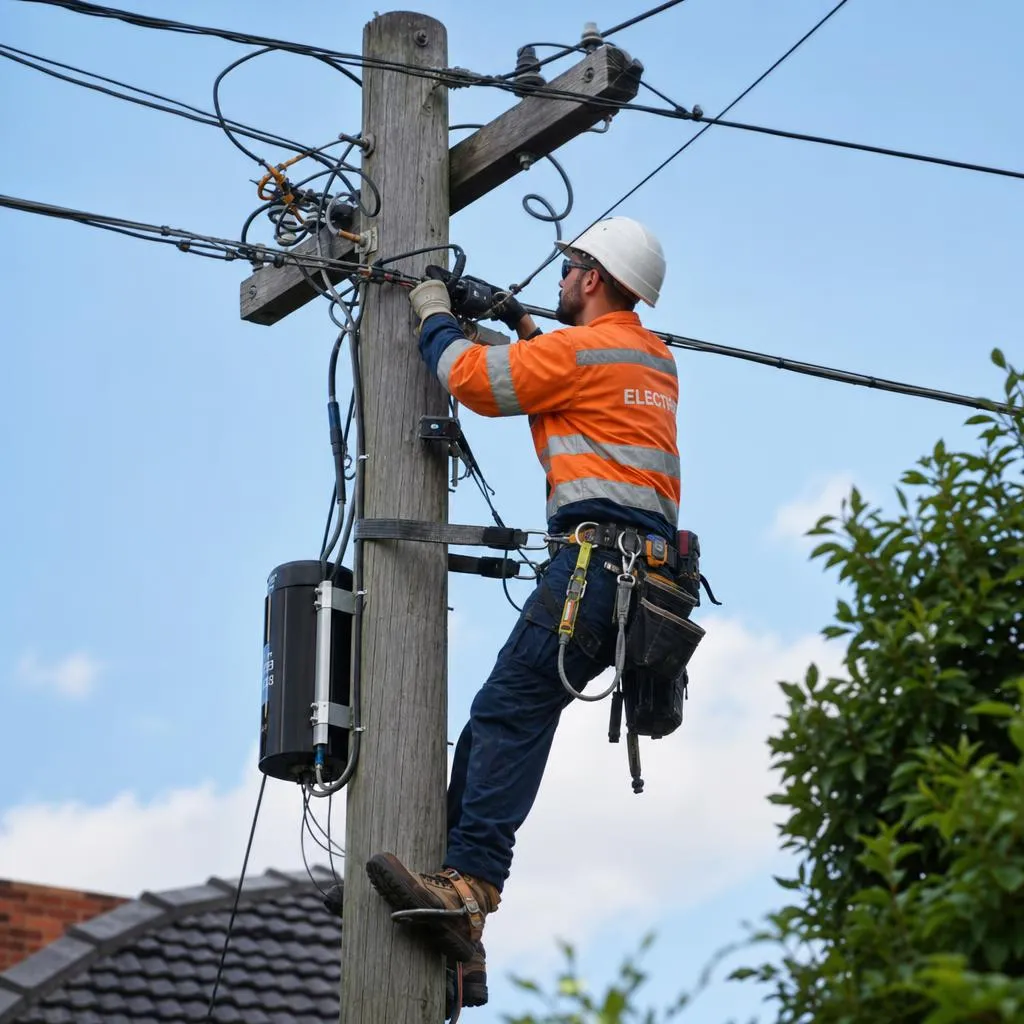
If there's a private power pole on your property, it's yours — your asset, your responsibility, and if it's rusting at the base or rotting from the inside, your risk. A defective pole rarely picks a convenient moment to fail. It comes down in wind or storm, with live overhead wires attached, and everything nearby is suddenly in the danger zone.
How Poles Fail — Usually Out of Sight
Steel poles rust from the inside out, worst at the ground line where moisture sits — a pole can look fine at eye level while the base has lost most of its strength. Timber poles do the same with rot and termite damage, hollowing out below the surface. Galvanised poles from decades ago are well past the point where the protective coating has done its job.
That's what makes defective poles so dangerous: the failure point is often hidden. Warning signs like flaking rust at the base, a visible lean, soft or cracked timber, or movement in wind are all reasons to have the pole professionally assessed — by the time signs are visible, there may be more deterioration below the surface than above it. Our private power pole inspection guide covers what a proper check looks for.
If It Falls: People, Property and Live Wires
A falling pole is heavy enough on its own to injure anyone underneath it or crush a car, fence or roof. But the pole is only half the hazard — it brings the live service wires down with it. A fallen wire can remain live, and it can energise fences, metal gates, wet ground and anything else it touches.
That's an electric shock risk for everyone nearby: your family, neighbours, passers-by, and pets. The rule for any fallen power line is absolute — stay well clear, keep others away, and treat it as live until it's confirmed safe. Call 000 if anyone is injured or in danger, and report the fallen line to your electricity network straight away. Teach kids the same rule.
Losing Power — at the Worst Possible Time
Because poles tend to fail in storms, a collapse usually means losing power exactly when everyone else is calling for help too. Until the pole is replaced and the service re-connected, the property can't be safely re-energised — that can mean days without power, often for deterioration a routine inspection could have flagged before it became an emergency.
There's a paperwork side too: a leaning or deteriorated pole is a classic trigger for a defect notice from the network, which puts the replacement on their deadline. And because the pole is private property, the owner carries the responsibility for maintaining it — our responsibilities guide explains where the line sits.
What to Do If Yours Is Suspect
If your pole is leaning, rusted at the base, showing rot or damage, or is simply decades old and has never been inspected, have it professionally assessed — don't test or disturb a suspect pole yourself. Replacement of a private pole and re-connection of the service is Level 2 ASP work. The cost guide covers what to budget, and a planned replacement is generally far less disruptive — and far safer — than dealing with a collapse.
If a pole has already come down or looks like it's about to, keep everyone well clear, treat the wires as live, call 000 if anyone is in danger, and report it to your electricity network. For assessment and replacement, Sydney Power Group is a Level 2 ASP accredited across the Ausgrid, Endeavour Energy and Essential Energy networks — call 0466 125 125 or get a quote.
Call us now for a no-obligation quote. Emergency response available 24/7.
0466 125 125Get a Free QuoteRelated Services
Need a Level 2 ASP Electrician?
Free assessment on any network electrical job. Emergency? We answer around the clock.